

The iconic Beer Villa in Vienna's Hietzing district is coming back to life after years of silence and will be open to the public from March 8, 2026. It was built between 1929 and 1930 according to a design by Josef Frank and Oskar Wlach for the family of Julius and Margarete Beer. The villa is considered a key work of Second Viennese Modernism. In an international context, it ranks alongside icons such as Villa Tugendhat, Villa Savoye, and Villa Müller.
History of the villa
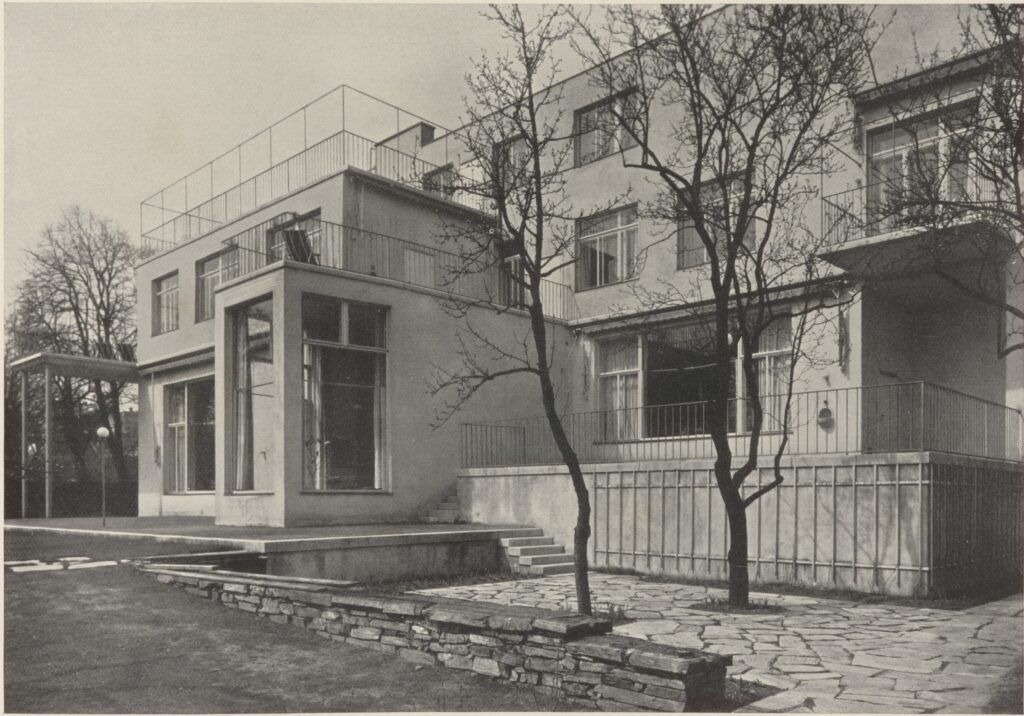
Frank’s vision of modern architecture was directed towards organic, living houses that liberate living from rigid rules, open up space for spontaneity, and dissolve the boundaries between architecture, interior design, and the urban context—an approach that continues to shape modern living today.
In addition to the architecture, Josef Frank and his partner Oskar Wlach also designed the entire interior of Villa Beer, including furniture, textiles, and curtains. These designs were produced by their joint company Haus & Garten.
A well-designed house is like one of those beautiful old towns where even strangers immediately feel at home and find the town hall and market square without asking for directions.
Josef Frank
Josef Frank (1885–1967): A native of Baden, he studied in Vienna under Karl König. He was a leading figure in Austrian interwar architecture and advocated a less dogmatic, more “human” modernism. In 1934, he emigrated to Sweden, where he became a famous designer for the company Svenskt Tenn.
Oskar Wlach (1881–1963): Frank’s long-time partner, with whom he founded the interior design company Haus & Garten in 1925. In 1938, due to his Jewish origins, he was forced to emigrate to the USA, where, however, he failed to build on his Viennese success.
Haus & Garten: A joint venture between architects who designed the complete interior of the villa, including furniture and textiles. Their style was characterized by colorfulness and a free arrangement of furniture.
Over the decades, the built-in furniture has been preserved, but most of the original furnishings have been lost. The preserved built-in elements have been restored and the missing parts have been replaced.
The Beer Family

Grete and Julius Beer, members of Vienna’s liberal Jewish community, moved into the villa with their children Elisabeth “Liesl” (1913–1942) and Hans (1920–1973), while their eldest daughter Helene “Lene” (1910–1985) was already living with her husband Rudolf Sternschein in their own home.
Grete had a Bösendorfer concert grand piano in the house. Today, we can only imagine how the sound carried through the two-story hall during musical evenings.
Liesl, who had overcome polio in childhood, had a space set up in the attic that served as a practice room but also as a darkroom for developing photographs.
The history of Villa Beer is inextricably linked to the fate of its Jewish owners. The joy of the new villa ended shortly after its completion in the early 1930s, when Julius Beer lost his position and eventually his shares in the company after professional and financial failures. He was subsequently unable to repay his loan.
Although the family retained the right to live in the house, from 1932 onwards they had to repeatedly rent it out to finance the repayments. The tenants included prominent artists such as Richard Tauber, Jan Kiepura, and Martha Eggerth, as well as their secretary Marcel Prawy, who lived in the house until his expulsion in 1938. The Beer family continued to live in the house until the summer of 1939, when they moved to the administrator’s apartment on Eitelbergergasse.
With World War II came decisions that could not be postponed indefinitely. The Beers waited as long as possible in the hope that Liesl would also be able to obtain a visa, but in May 1940 Julius and Grete left for New York with their son Hans. Liesl was unable to leave due to her persistent physical disability and restrictive US immigration rules. She was hidden for a time, but later taken from the collection apartment on Neutorgasse and deported to Minsk in 1942, where she was murdered in the Maly Trostinec concentration camp. Julius died in New York in 1941. Grete returned to Austria after the war, but never returned to the villa. She spent her last years in Baden near Vienna, where she died in 1978. Lene and her husband Rudolf fled to Scotland in 1938, where they ran a leather goods factory. During the war, their children George (1941) and Barbara (1944) were born there. After 1945, Hans (Henry) served in Austria and Germany as a soldier in the US Army.
Tours
The villa will be open to the public from March 2026 through individual and interactive guided tours, and on weekends without a guide. The offer will be complemented by cultural events, symposia, research, publications, and educational programs. The tour program will focus on the architecture, the fate of the Jewish family who commissioned the building, and the historical context of Vienna in the 1930s. In addition, rooms in the villa will be available for rent for events, and three guest rooms will offer overnight accommodation.
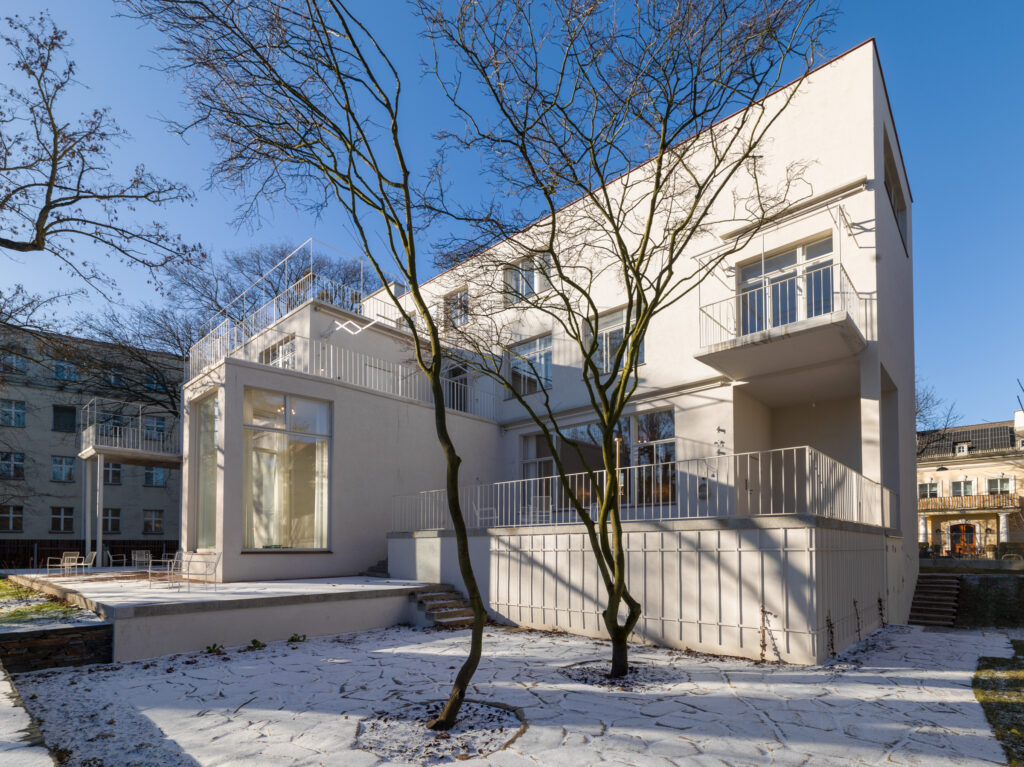
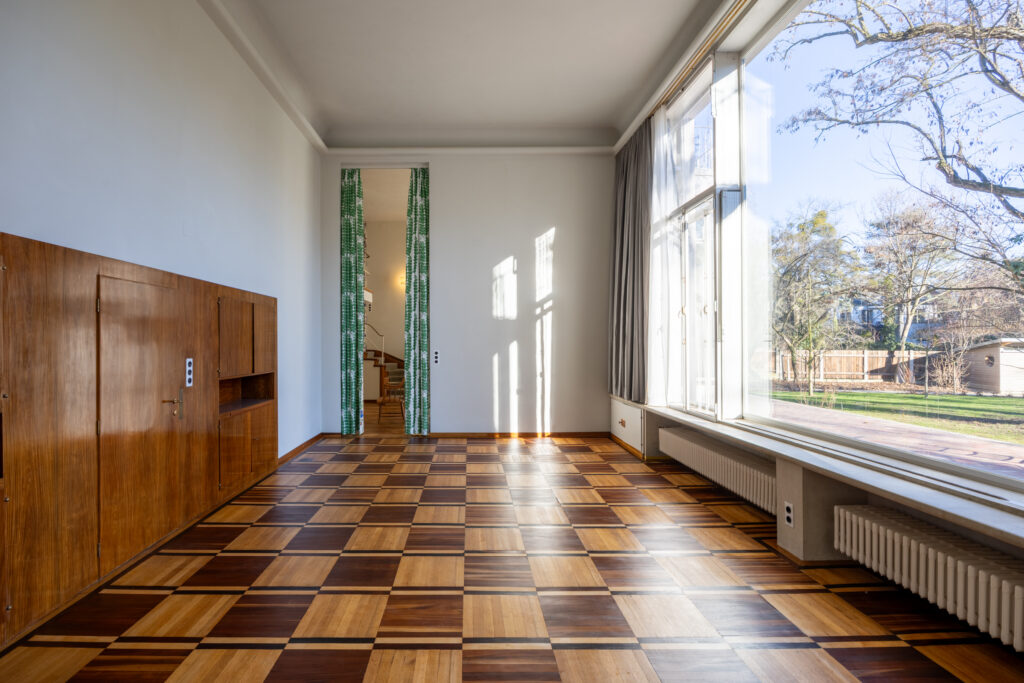

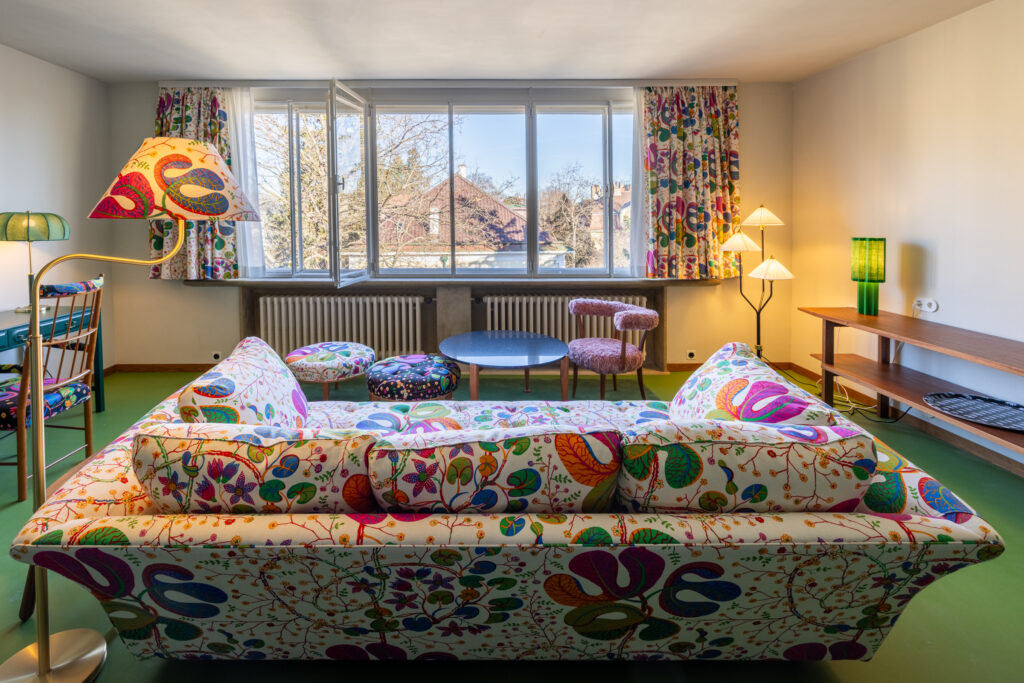
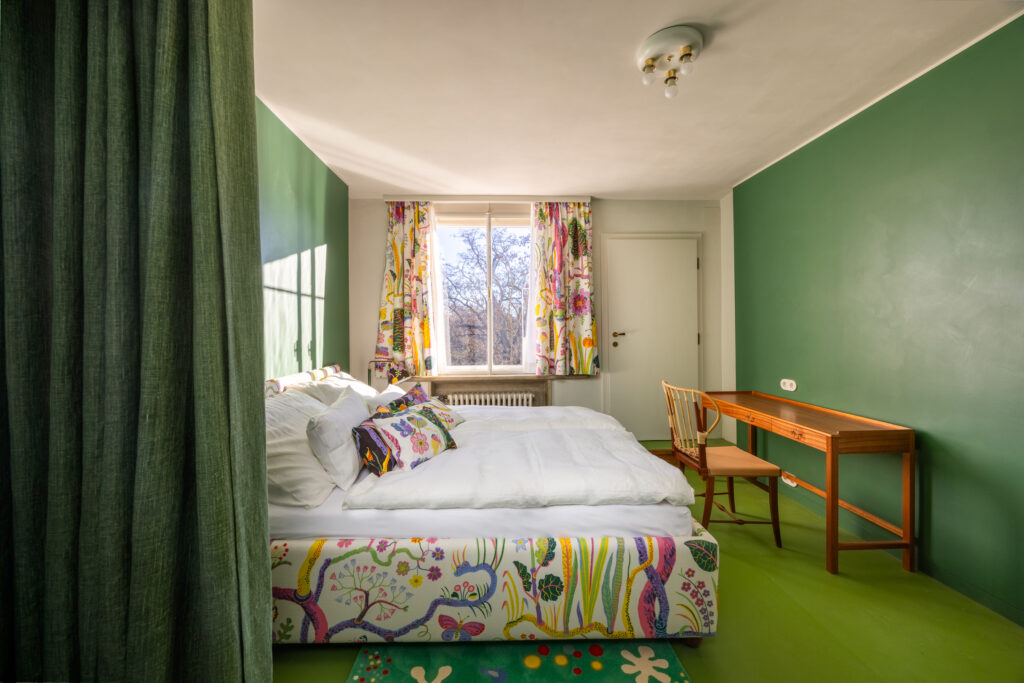

Photo: Stefan Huger
Source: villabeer.com